
The ABCD Ph.D. Meeting on RNA Functional Biology: from Mechanisms to Models is a two-day scientific event dedicated to early-stage researchers working at the interface of RNA biology, functional genomics, and biomedical research. The meeting brings together pre-doctoral, doctoral, and post-doctoral scientists in a stimulating and friendly environment designed to foster discussion, exchange of ideas, and scientific growth.
The meeting focuses on RNA-centered functional mechanisms, focusing on gene regulation, including non-coding RNA biology, RNA folding and structure, epigenetic and epitranscriptomic regulation, and the integration of omics technologies. Particular emphasis is placed on experimental and computational models that link fundamental RNA biology to functional genomics and biomedical applications.
Participants are encouraged to present their research projects, preliminary data, and ongoing work, and to engage in open discussion with peers and senior scientists. The program is structured into thematic sessions, each introduced by an invited keynote speaker with international expertise, who will actively participate in scientific discussions throughout the meeting.
The ABCD Ph.D. Meeting aims to provide a supportive platform for young researchers to refine their scientific questions, receive constructive feedback, and build connections within a vibrant and interdisciplinary RNA research community.
We look forward to welcoming you to Reggio Emilia!

Alessia Ciarrocchi is a Molecular Biologist and the Coordinator of Laboratory of Translational Research at the AUSL-IRCCS of Reggio Emilia (tRES_Lab). She graduated in Biological Science in 1999 and got her PhD in “Cellular Biology and Physiology” at the University of Bologna, under the supervision of Prof. Marialuisa Melli. After a 3 years Post-Doctoral experience in the laboratory of Dr. Robert Benezra at Memorial Sloan Kettering Cancer Center, New York (USA) she moved to the IRCSS of Reggio Emilia, where she contributed to the construction and development of the Translational Research infrastructure. Main scientific interest is to understand how alterations in the sequence, function and organization of the genome contribute to oncogenesis, in particular to the processes of tumor progression and metastatic spreading. Particular attention is given to the functional elements that concur to transcriptional plasticity of cancer, including transcription factors, regulatory DNA elements and long non coding RNAs.The tRES_Lab operates in tight connection with the clinical departments of the IRCCS working either as promoter of basic science derived proof-of-principle and as support for translational projects that raise from clinical questions in the daily practice.
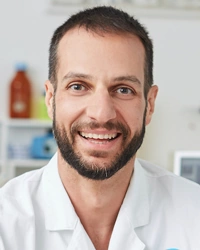
Francesco Nicassio is the Coordinator of the Center for Genomic Science (CGS) of the Istituto Italiano di Tecnologia (IIT) in Milan and the head of the Genomic Science research line. He obtained his degree in Biology from the University of Bari and completed his PhD in Life Sciences in 2004 at the European Institute of Oncology (IEO, Milan), under the supervision of Prof. Pier Paolo Di Fiore. His research focuses on the use of advanced genomic and transcriptomic approaches to investigate the regulation of gene expression by non-coding elements, including microRNAs, long non-coding RNAs, and regulatory elements associated with chromatin. His work aims to understand how RNA-based regulatory mechanisms control cell plasticity and contribute to human disease, with a particular emphasis on cancer biology. His research activity is structured around a hybrid experimental–computational framework, integrating functional genomics, single-cell and multi-omics technologies, and advanced data analysis. In recent years, he has led the development of technological platforms for RNA research at IIT, including single-cell omics, CRISPR-based functional screening, and long-read sequencing approaches for RNA analysis. These platforms are applied to both fundamental RNA biology and translational research, with the goal of bridging basic mechanisms with clinical and biomedical applications.
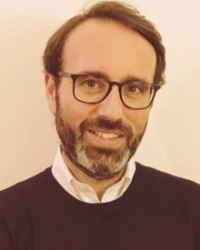
Roberto Giambruno is a researcher at the National Research Council (CNR) working at the Institute for Biomedical Research and Innovation (IRIB), located in Palermo. In 2005, he obtained his bachelor degree in Biological Sciences at the University of Palermo and, in 2008, his master degree in Genetic and Molecular Biology at the University “La Sapienza” of Rome. Then, he was enrolled in the PhD program of the Center of Molecular Medicine (CeMM) of the Austrian Academy of Science in Vienna under the supervision of G. Superti-Furga. He graduated in 2014 and moved back to Italy in the group of D. Gabellini thanks to the San Raffaele International Postdoctoral Programme – Marie Curie Actions. In 2017, he won a postdoc position within the Italian PhDiTalents national programme at the European Institute of Oncology (IEO) in the group of T. Bonaldi. From 2020 to 2022 he worked as postdoc in the group of F. Nicassio at the Center for Genomic Sciences of the Italian Institute of Technology (IIT) in Milan. In 2022, he became a CNR researcher working initially at the Institute of Biomedical Technologies (ITB) and from 2023 at IRIB. His research interest focus on protein-protein and protein-RNA interactions; post-transcriptional and post-translational modifications; non-coding RNAs; -OMIC technologies for the unbiased identification of protein and RNAs (Mass spectrometry-based proteomics; Next generation sequencing; Nanopore RNA sequencing; Proximity-dependent biotinylation strategies).


